Human slavery first arose in the 17th and 18th century when African American people were forced into slavery by the American colonies. They worked as laborers and indentured servants producing tobacco and cotton. African Americans were directly targeted the most during this time of hardship because they were considered to be the lowest race compared to white people who lived in America. Although African Americans were targeted the most that doesn’t mean that all the other races were not forced into compliance by white people. African Americans were treated like animals having ‘Masters’ literally being owned. There were people who fought this injustice, for example, Martin Luther King Junior and Harriet Tubman. They fought for equal rights for everyone no matter what color they were. Going into the early 19th century according to History, “Slavery in America,” “America’s westward expansion and the abolition movement provoked a great debate over slavery that would tear the nation apart in the bloody Civil War,” (History, 2020). After the Civil Rights movements, you’d think that after all the struggles that America has had with rights with different races that they would try to avoid Slavery in all aspects right? That really isn’t the case in our society. Human slavery is not happening outright currently, but there are different horrific acts that could be seen as an extension of slavery.
Modern-day slavery can be considered as, “women forced into prostitution, men forced to work in agriculture or construction, children in sweatshops or girls forced to marry older men, their lives are controlled by their exploiters, they no longer have a free choice and they have to do as they’re told,” (Anti-Slavery, 2020). In this post, we will be specifically focusing on Human Trafficking, which can be defined as women/ kids forced into prostitution chains all around the world. This is done by kidnapping in particular. All over the world kids are being kidnapped from their normal daily lives, taken and broken in order to have the compliance to spend their lives in these underground sex trafficking chains. Some may wonder, how can kids be taken so easily to never be seen again? My view on this is that the topic of Human Trafficking and kidnapping is not talked about enough in our society for parents/ citizens to always have the awareness that something could happen, even if they think they are safe. This is greatly due to the perception that people don’t realize they need in order to understand the dangers of Human Trafficking that loom over everyone, putting aside age, race, or gender.

Perception can be defined as, “immediate or intuitive recognition or appreciation, as of moral, psychological, or aesthetic qualities; insight; intuition; discernment,” (Dictionary, 2020). Perception can be organized into three major components; Selection, Organization, and Interpretation. Selection is determined by personal motives and cultures. The organization is determined by culture and perceptual constructs. Lastly, Interpretation is determined by past experiences, assumptions about human behavior, expectations, knowledge, culture and personal moods. The most important aspect of perception when pertaining to Human slavery and Human trafficking is Interpretation. People interpret the topic of Human Trafficking as a side problem to other major things happening in society. When in reality over one million people are taken into these chains yearly! People in our modern-day society don’t realize they are all in danger of this threat unless they are directly affected. There are hundreds probably thousands of different organizations that try to spread awareness about Human Trafficking, and even then our society doesn’t take into consideration that we have enough power and influence to help find taken women and children. One organization, in particular, was used to answer some questions that my group and I had about Human Trafficking in our society today.

The community partner we interviewed was, Ken Gilmore from the organization, “Guardian Group.” The Guardian Group tries to find women and children that have fallen under human trafficking and take down different leaders of these chains. His position directly is to find information that could lead them to missing trafficked people and leaders of trafficking chains. One very important aspect that Gilmore talked about was a girl named Caroline that was taken directly from her house in Eastern Syria by ISIS. ISIS is an extremist group that follow a religion from the Koran where they believe that their religion is and should be the only one. Which means that anything that the Koran says they follow, in this sense they felt it justified to take Caroline out of her home for not following the same religion as them. This is connected to the Perception of the topic of Human Slavery because ISIS interprets the act of kidnapping and putting kids like Caroline into the system justified based on their religion. Selection also plays a great role in Human Trafficking because it is not targeting everyone. But rather it targets women and children specifically who are vulnerable even before they are taken. According to Gilmore, people who go recruiting usually look for girls that have low self-esteem because they are easier to manipulate into thinking that joining these chains is an easy way out from their lives. This really affects the perception of Human Slavery as a whole because most people believe that everyone who is taken into prostitution and human trafficking chains is taken against their will when in reality, this an interpretation for people to feel as if they didn’t know it was going to happen. Gilmore states that most girls are tricked into sex trafficking, but also grabbed then broken down. In order to help stop the dangers of sex trafficking, people need to change their perceptions of the topic rather than look away and have everyone else take care of it for them.
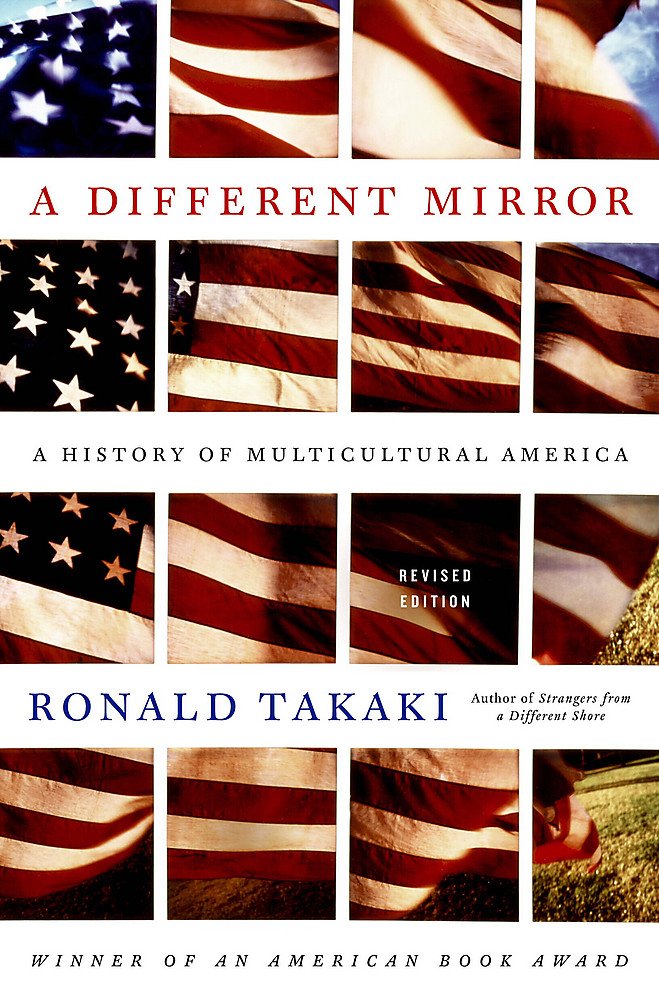
In our required reading by Ronald Takaki, “A Different Mirror,” perception plays a key role in reading this novel because it helps us have a better understanding of how the Native Americans were treated under the segregation, and discrimination they faced in our history. Takaki writes about ‘factory girls’ which is a strand of human slavery because there are children being forced into labor under horrible management and conditions. He writes, “On January 10, 1860, a terrible tragedy occurred at Lowell’s Pemberton Mill. A building suddenly collapsed trapping nine hundred workers, mostly Irish women; then a fire broke out, adding to the terror and destruction. One hundred and sixteen were seriously hurt while eighty-eight were killed,” (Takaki, p.150). Working in a factory in itself should be safe given that accidents can happen anytime but because the workers were basically treated as slaves themselves no one cared to treat them as people, just tools to produce and manufacture things for people of higher status, or even race. Perception plays a role in this Takaki’s writing when relating to human slavery because it allows readers to have a deeper understanding of how human slavery has been occurring under our noses for centuries although equal rights have been given to some extent. Society now even, needs to realize that human slavery is still surviving and it needs to have more awareness so innocent people are not taken and never seen again.
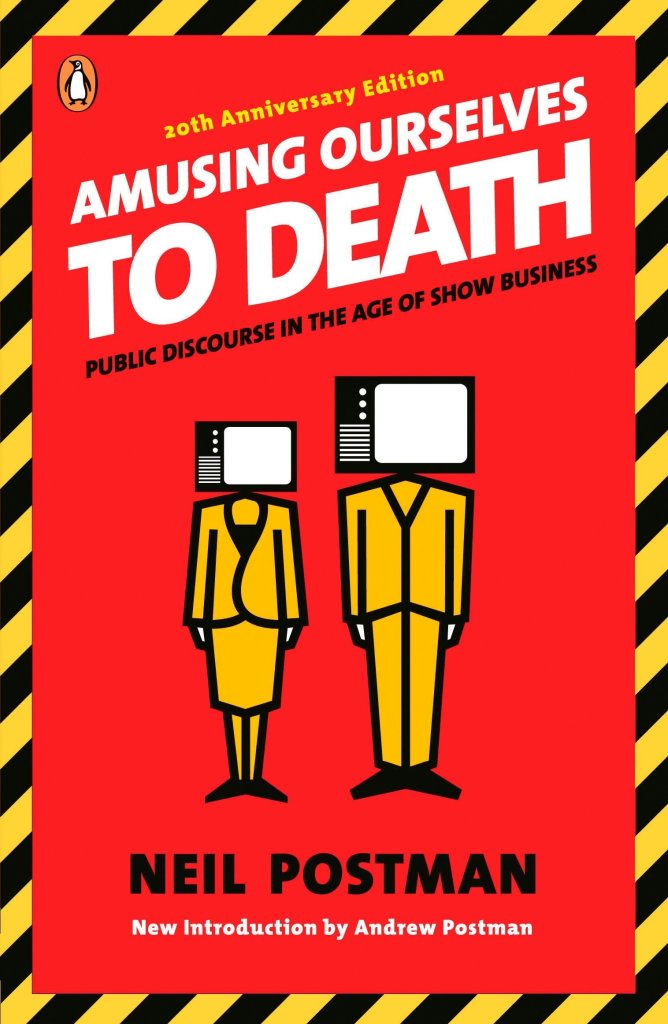
In our second required textbook written by Neil Postman, “Amusing Ourselves to Death,” perception is important because Postman writes about how the creation of the printing press revolutionized the way information was transferred around the world. In my opinion, this can be a form of slavery because people who control the news in Postman’s case the printing press are able to influence people’s views in a way that supports their ideas rather than having people who find out about the information themselves to form their own. When talking about perception, people take information from the printed word as fact rather than interpreting it as a generalization that excludes key information that can ultimately change the whole narrative. The printed word in a sense controlled everyone’s views and ideas, which is a form of human slavery. The printed word was the masters and the people taking the words as truth are the slaves that were not allowed to form their own conclusions. In society today the news still controls how people view different topics, especially politics, which show that slavery is not gone but rather it is evolving into our everyday lives without us realizing it.
To sum the topic of Human Slavery when pertaining to perception as a whole, slavery is very much alive in society. Whether it be in the chains of human trafficking, or even the media-controlling the minds of its users. As a modern society, we need to work together to spread awareness of human trafficking so we lower the risk of our families being taken every day.
References
Gilmore, K. (2020, February 10). [Personal interview by the author].
Perception. (n.d.). Retrieved from https://www.dictionary.com/browse/perception
Postman, N. (1985). Amusing Ourselves To Death (20th Anniversary ed.). Penguin Books.
History.com Editors. “Slavery in America.” History.com, A&E Television Networks, 12 Nov. 2009, http://www.history.com/topics/black-history/slavery.
Takaki, R. (2008). A Different Mirror (Revised ed.). Back Bay Books.
What is Modern Slavery? (n.d.). Retrieved February 18, 2020, from Anti-Slavery website: https://www.antislavery.org/slavery-today/modern-slavery/
 Human Slavery